
Table of Contents
- Protecting Your Treasured Memories with UV Glass
- What Is UV Glass and How Does It Work?
- UV Glass, Light Damage, and Artwork Preservation
- Choosing the Right Glazing for Your Custom Framing Project
- Conservation-Grade Framing Standards and Best Practices
- Common Questions About UV Glass and Glazing
- Preserve Your Legacy with Supreme Pictures
Protecting Your Treasured Memories with UV Glass
Sunlight and indoor lighting emit ultraviolet radiation that can fade and deteriorate your framed photographs, art prints, and documents over time. To help preserve these treasures, our UV glass upgrade is available for custom framing projects in Mississauga and the Greater Toronto Area. It significantly reduces fading by blocking harmful UV rays, keeping your memories vivid for decades. Your memories deserve that level of care.
Related service: custom framing services in Mississauga — serving Mississauga, Brampton and the GTA.
High-quality UV glass works by filtering out at least 97% of ultraviolet radiation, as recommended by the Canadian Conservation Institute for preserving paper-based artworks and family heirlooms. Unlike standard glass, which transmits the full UV spectrum, UV-protective glazing helps maintain the original colours and details of your framed items.
- Blocks 97% of UV rays to slow fading and yellowing
- Ideal for items of sentimental or monetary value
- Recommended for rooms with direct sunlight
We recommend selecting UV glass for any piece you want to enjoy for decades, particularly those displayed in bright rooms or near windows. At Supreme Pictures, we make it easy to upgrade to UV-protective glass when you build your custom frame online.
When you order custom picture frames from Supreme Pictures, you can select UV glass to ensure your memories are protected for years to come. Trust our experience to help you Relive your memories with vibrant, safely framed pieces.
What Is UV Glass and How Does It Work?
UV glass is a professional glazing option that incorporates a transparent UV-absorbent coating to block approximately 97% of ultraviolet radiation. According to the Canadian Conservation Institute’s guide on conservation glazing materials, UV glass blocks 97% of ultraviolet radiation, making it a significant upgrade over standard glass. This UV-protective glass works through a specially formulated coating that absorbs electromagnetic energy in the 300–400 nm wavelength range before it can reach your artwork. Standard clear glass, by comparison, filters out only about 40–45% of UV light—leaving delicate prints and photographs vulnerable to accelerated fading and paper degradation.
As detailed in the Canadian Conservation Institute’s note on Ultraviolet Filters, the coating in UV-filtering glass absorbs UV radiation in the 300–400 nm range, preventing the high-energy wavelengths from interacting with organic pigments and paper fibres. While UV glass does not eliminate all light-induced damage, it substantially slows the chemical processes that cause yellowing and colour loss.
Drawing on Canadian Conservation Institute guidelines, the table below compares the key features of the three most common framing glazing options.
| Feature | Standard Glass | UV Glass | Museum Glass |
|---|---|---|---|
| UV Protection | Minimal (blocks ~40–45%) | High (blocks ~97%) | Premium (blocks ~99% + anti-reflective) |
| Clarity / Optical Grade | Basic clear float glass | Clear with UV-absorbent coatings | Ultra-clear with anti-reflective coating |
| Reflectivity | High glare in bright light | Moderate glare | Very low glare |
| Best For | Short-term display / low-value items | Photographs, artwork, memorabilia | Fine art, heirlooms, high-value collections |
| Cost Factor | Lowest | Moderate ($10–$30 upcharge typical) | Highest (2–3× UV glass) |
The comparison highlights the distinct advantages of UV-blocking glass for everyday collectors. While standard glass offers minimal protection at the lowest cost, UV glass provides a practical balance: it cuts UV exposure by 97% — a dramatic improvement — while remaining far more affordable than museum glass. Its moderate glare is acceptable in most residential and office settings, and the modest upcharge makes it a sensible upgrade for photographs, diplomas, and sports jerseys that hold personal value. Museum glass’s near-perfect UV blockage and anti-reflective coating deliver the ultimate clarity but at a price point suited primarily for investment-grade fine art and heirlooms.
We at Supreme Pictures recommend UV-protective glass for any framed artwork that carries sentimental or monetary value, especially pieces displayed in rooms with natural or fluorescent light. Photographs, limited-edition prints, and memorabilia benefit enormously from the 97% UV blockage because it significantly reduces the cumulative damage that visible and ultraviolet light cause over time. However, it is important to understand that UV glass does not completely prevent fading. Other environmental factors — such as high humidity, temperature swings, and airborne pollutants — also contribute to deterioration, and visible light itself carries energy that can break down dyes and paper fibres. Still, by choosing UV-filtering glass, you take a critical step in preserving your artwork’s colour and integrity for years to come.
UV Glass, Light Damage, and Artwork Preservation
Beyond choosing the right frame moulding, selecting the correct glass is critical for long-term preservation. Understanding how uv glass works is the first step in safeguarding your artwork, photographs, and keepsakes from the cumulative effects of light exposure.
Understanding Light Damage and UV Radiation
Light damage in framed pieces occurs through photochemical and photomechanical mechanisms that degrade materials over time. Photochemical damage drives dye fading, paper yellowing, and pigment breakdown as ultraviolet (UV) and visible light energy triggers molecular reactions. Photomechanical damage manifests as embrittlement, cracking, and dimensional changes in paper, canvas, and emulsions when energy absorption causes physical stress. UV radiation—specifically wavelengths between 280 and 400 nanometres—is the most aggressive contributor to fading, but the full visible spectrum also adds cumulative harm.
According to guidance from the Canadian Conservation Institute, UV radiation is 10 to 13 times more reactive than tungsten lamp light, making daylight a particularly aggressive source. Even sensitively displayed works can fade in as little as 1.5 to 20 years when exposed to recommended light levels of 50 lux, demonstrating how quickly irreversible change can accumulate. This understanding underscores why any framing strategy for long-term display must address both the intensity and the duration of light exposure.
How UV Glass Mitigates Fading Risks for Photographs and Art
UV glass mitigates fading risks by incorporating UV-absorbent coatings or interlayers that intercept harmful wavelengths while preserving optical clarity. These specialized filters block a high percentage of the UV spectrum—typically 97% or more in conservation-grade products—without noticeably altering colour rendition or brightness. By removing the most energetic wavelengths before they reach the artwork, UV glass significantly slows the photochemical reactions that cause dyes and pigments to deteriorate.
The Canadian Conservation Institute notes that standard clear glass blocks only about 26% of UV radiation, while museum-targeted glass averages an 83% reduction. Conservation-grade glazing, however, can achieve up to 99% UV blocking, dramatically extending the display life of photographs, posters, and original art. Because UV filters degrade over many years, particularly in high-light environments, we recommend periodic inspection to ensure ongoing protection. The goal is not to eliminate light entirely—some visible light is necessary for enjoyment—but to strike a balance that lets your framed pieces be seen while safeguarding their vibrancy.
UV Protection Levels: 70% vs. 97% vs. 99%
The level of UV protection you choose should match the value and sensitivity of the item you are framing. The table below summarizes the protection levels available, their typical applications, and the estimated lifespan benefit for displayed items.
| Protection Level | Application Type | Estimated Lifespan Benefit |
|---|---|---|
| ~70% UV Blocking | Standard acrylic / basic non-conservation glass | Moderate reduction in fading over standard glass |
| ~97% UV Blocking | Conservation-grade UV glass (recommended for photographs, posters, and most art prints) | Significant slowing of fading; suitable for 10+ year display |
| ~99% UV Blocking | Museum-grade glass (ideal for fine art, heirlooms, critical conservation) | Maximum achievable protection; aligns with museum display standards |
As shown in the table, 97% UV-blocking glass offers an excellent balance for family photographs, signed posters, and everyday art prints, while museum-grade 99% blocking is best reserved for fine art originals, historically significant documents, and irreplaceable heirlooms. Both options rely on UV-absorbent technology that transmits visible light clearly, so your framed piece remains bright and true to colour.
Choosing the Right Glazing for Your Custom Framing Project
Once you’ve selected your frame and matting, your next important decision is the glazing — the glass that protects your artwork. UV glass, also known as UV-protective glass, filters out approximately 97% of harmful ultraviolet rays compared to only about 45% with standard glass. Choosing the right glazing is essential to preserve the colors and integrity of your framed piece for years to come.
Evaluating Your Framing Project’s Conservation Needs
Every framing project benefits from a quick assessment of conservation needs. The value of the item, its expected display lifetime, and the light conditions where it will hang all determine the level of protection required. Photographs demand particular attention because the dyes and inks on photographic paper are highly sensitive to UV light. Without UV glass, a framed photograph displayed in a sunlit room can show noticeable fading within months.
Cost-Benefit Analysis: UV Glass vs. Standard Options
While UV glass does carry a modest premium over standard glass, the long-term value it provides far outstrips the small upfront difference. Re-printing a faded photograph or restoring a discolored piece of art often costs significantly more than the upcharge for UV-filtering glazing.
Framing with UV Glass at Supreme Pictures
Requesting UV glass with your custom frame at Supreme Pictures is straightforward. If your project calls for something beyond clear protection, we also provide decorative alternatives. For clients who want a reflective finish, Supreme Pictures offers mirror glass in Mississauga as an elegant glazing option.
Conservation-Grade Framing Standards and Best Practices
Conservation-grade framing occupies the essential middle tier between standard economy framing and museum-level protection. It is designed to shield valuable prints, photographs, and documents from environmental damage without the premium cost of museum-grade materials.
Common Questions About UV Glass and Glazing
What is UV glass? UV glass is a specialized glazing that blocks up to 99% of ultraviolet rays, significantly slowing the fading of artwork, photographs, and documents.
When should I use UV glass? Items in direct sunlight, valuable art, heirlooms, and light-sensitive pieces benefit most from custom picture frames with UV glass.
Preserve Your Legacy with Supreme Pictures
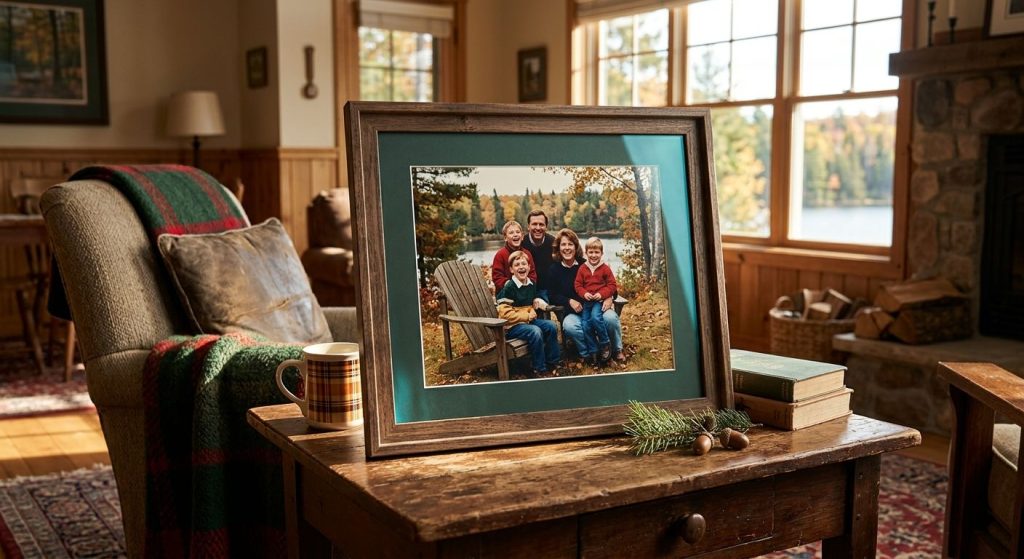
Family photographs capture the stories of our lives—milestones, laughter, and the people we love. These images are a legacy meant to be cherished for generations. Our easy online process lets you upload, choose media, and preview your custom frame, preserving those memories with professional care.
Experience the Supreme Pictures Difference today and relive your memories for generations to come. This article was researched and written with the assistance of AI tools.
Resources
- Find Expert Custom Mirror Glass in Mississauga
- Order Custom Picture Frames with Conservation Framing
- Get Professional Custom Framing to Avoid DIY Risks
- Get Transparent Pricing for Custom Picture Frames
- Order Custom Picture Frames with Canada-Wide Shipping
- Preserve Artwork with UV-Protective Custom Framing
- Find Professional Custom Framing in Mississauga
- Learn About Conservation Glazing Materials for Framing
- Find a Professional Conservator Through AIC Resources
- Get Professional Framing Certification Through PPFA
- Protect Art Collections with Specialized UV Filters
- Protect Paintings with Environmental Display Guidelines