
Quick answer: For a canvas above a couch, pick a canvas print size that spans roughly two-thirds of the sofa’s width and hang it so the centre of the artwork sits about 57 to 60 inches from the floor (standard eye level). For the photo to look crisp at that size, the file should hold about 300 DPI at the final print dimensions. A typical modern phone photo prints beautifully up to 20×30 inches or larger, but the only sure way to know is to have someone look at the actual file before printing, which is exactly what we do at our Tomken Road studio in Mississauga.
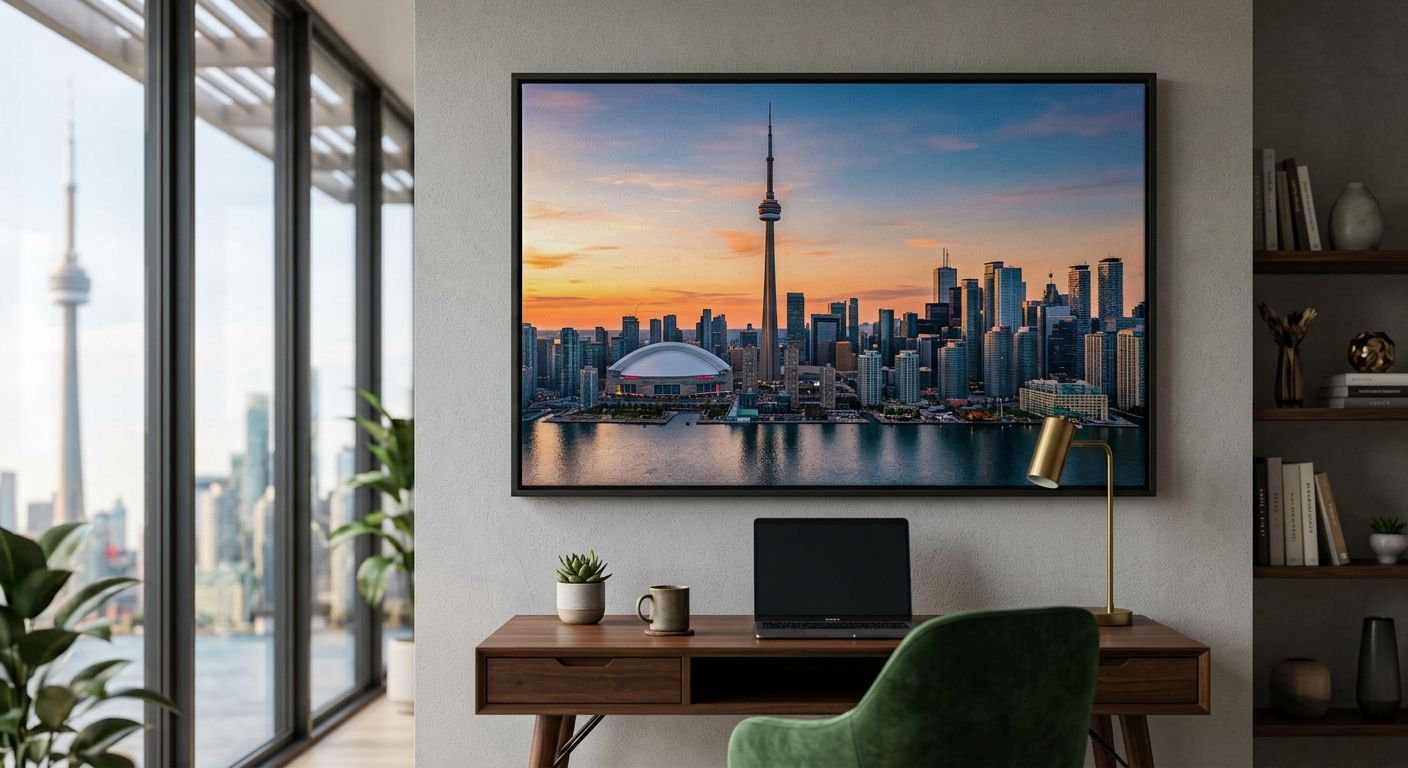
Summer travel means a camera roll full of sunsets, lake mornings, and once-in-a-lifetime views. This guide walks you through choosing the right canvas size for your wall and confirming your favourite shot has the resolution to be blown up, so you never end up with a blurry surprise on the wall.
What canvas print size should I get for above a couch or bed?
The most reliable starting point is the two-thirds rule: your canvas (or the full grouping, if you are hanging a set) should be about two-thirds the width of the furniture beneath it. A standard three-seat sofa is roughly 84 inches wide, so a single canvas around 48 to 56 inches wide looks balanced and intentional. Go much smaller and the art looks stranded; go wall-to-wall and it feels cramped.
Here are practical pairings to start from:
- Standard sofa (about 84 inches): one 40×60 inch canvas, or a pair/triptych totalling 50 to 55 inches wide.
- Loveseat or apartment sofa (about 60 inches): a single 30×40 inch canvas.
- Queen bed (60 inches wide): one 40×30 inch canvas centred, or two 20×20 inch squares.
- King bed (76 inches wide): a 50-inch-wide canvas or a balanced trio.
Leave four to eight inches of breathing room between the top of the furniture and the bottom of the frame so the two pieces read as a set rather than one crowding the other.
How high should I hang canvas wall art?
Designers and galleries use a shared standard: hang art so its centre point lands at about 57 to 60 inches from the floor, which is comfortable eye level for most adults. This “museum height” is why professionally hung rooms feel calm and consistent. Architectural Digest’s guide to hanging art walks through the same centre-line approach, and it is the placement standard used by design institutions like the Smithsonian.
The one adjustment: when art hangs above furniture, keep the bottom edge four to eight inches above the sofa or headboard even if that nudges the centre slightly. The furniture becomes the visual anchor, and a small gap keeps the arrangement from feeling top-heavy.
What canvas print size and resolution do I need for a photo?
Print sharpness comes down to how many pixels land in each inch of the finished piece, measured as DPI (dots per inch) or PPI (pixels per inch). The professional target is 300 DPI at the final print size. To find the pixel count you need, multiply each dimension in inches by 300:
- 16×20 inches: about 4800 x 6000 pixels for 300 DPI.
- 24×36 inches: about 7200 x 10800 pixels at 300 DPI.
Here is the reassuring part: canvas is far more forgiving than glossy photo paper. Because of the woven texture and the natural viewing distance for large wall art, canvas prints hold up well at 150 DPI or even a bit lower. A photo that would look soft as a small desk print can look excellent as a big canvas across the room. Adobe’s overview of image resolution and standard print sizes is a helpful primer if you want to understand the pixel maths behind it.
Can I print an iPhone photo on a large canvas without it looking blurry?
Usually, yes. A recent iPhone or Android photo is typically 12 megapixels or more (about 4000 x 3000 pixels), which comfortably covers a 20×30 inch canvas at high quality and stretches to 30×40 inches and beyond on canvas. Blurriness rarely comes from the phone itself. It comes from these avoidable issues:
- Digital zoom: pinching to zoom before you shot the photo throws away real detail.
- Screenshots or shared/compressed copies: a photo texted or downloaded from social media is often a fraction of the original resolution.
- Heavy cropping: cropping to a tiny corner of the frame reduces the pixels that remain.
- Low light or motion blur: softness baked in at capture cannot be added back.
This is the exact moment a local shop beats a blind online upload. When you email a file to a website, nobody looks at it; it just prints, and any softness shows up on your wall. When you bring your photo to our studio, a real person opens the file, checks the true resolution, previews it at your chosen size, and tells you honestly whether it will look great, whether a slightly smaller size is smarter, or whether the original (higher-resolution) version on your phone would be better. Ask about our gallery-wrapped canvas printing and bring the original file, not a screenshot.
Is canvas or framed print better for photos?
Neither is universally better; they suit different photos and rooms.
Canvas suits landscapes, beach and lake scenes, and anything with a relaxed, artful feel. There is no glass, so no glare, which makes it forgiving in bright rooms. The gallery wrap gives a clean, modern edge that works well in casual and contemporary spaces.
Framed prints suit portraits, formal shots, and pieces you want to feel crisp and finished. Glass or acrylic adds protection and a polished look, and the frame lets you match your decor. If you are weighing a framed photo, our team also handles custom picture framing and can show you moulding and mat options in person, or you can browse ready-made picture and photo frames.
Turn your best travel shot into wall art
Whether you are in Streetsville, Meadowvale, Erin Mills, or driving in from Brampton down Highway 410, our studio is an easy trip. We serve Mississauga, Brampton, Etobicoke, Oakville and the wider GTA, and we would love to help you pick the right size and confirm your photo is ready to print before we start. Explore our canvas printing service, then call us at (905) 956-7400 or stop by with your file. We will preview it at size on the spot.
Supreme Pictures
7025 Tomken Rd, Unit 4, Mississauga, ON L5S 1R6
Phone: (905) 956-7400
Hours: Monday to Friday 10:00 AM – 7:00 PM; Saturday 9:00 AM – 5:00 PM; Sunday closed
Still torn between two options? When in doubt, go one canvas print size up — walls absorb artwork, and a slightly larger canvas print size almost always looks more intentional than one that is too small. Bring your photo and wall measurements to our Mississauga studio and we will confirm the right canvas print size together.
Frequently asked questions
What size canvas print should I get for above a couch?
Aim for a canvas about two-thirds the width of the sofa. For a standard 84-inch sofa, that is roughly a 40×60 inch single canvas or a grouping totalling 50 to 55 inches wide, with four to eight inches of gap above the furniture.
What resolution do I need to print a photo on canvas?
The professional target is 300 DPI at the final print size (dimension in inches x 300 = pixels needed). Canvas is forgiving, though, and often looks excellent at 150 DPI because of its texture and typical viewing distance.
Can I print an iPhone photo on a large canvas without it looking blurry?
In most cases, yes. A 12-megapixel phone photo prints cleanly up to 20×30 inches and larger on canvas. Blur usually comes from digital zoom, screenshots, compressed shared copies, or heavy cropping, not the phone. Bring the original file so we can verify it before printing.
How high should I hang canvas wall art?
Hang it so the centre of the artwork is about 57 to 60 inches from the floor. When it sits above furniture, keep the bottom edge four to eight inches above the sofa or headboard even if that shifts the centre a little.
Is canvas or a framed print better for photos?
Canvas suits landscapes and casual, artful scenes and avoids glare with no glass. Framed prints suit portraits and formal shots and add protection and a polished, decor-matched finish. We offer both and can compare them for your photo in person.